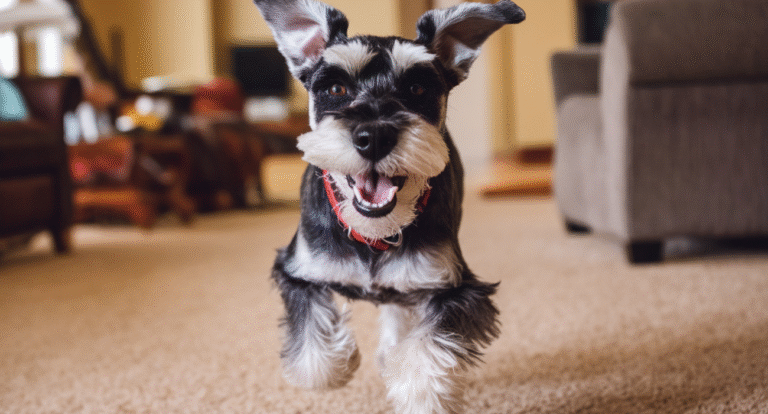
Help your energetic Miniature Schnauzer thrive with ideas that channel their zest for life into positive, manageable routines you’ll both love.
Your Miniature Schnauzer just ricocheted off the couch, zoomed under the dining table, and is now staring at you with those intense eyebrows like they’re ready for round two. Sound familiar? These compact bundles of enthusiasm come with battery packs that would make the Energizer Bunny jealous.
The good news? That legendary Schnauzer energy can be channeled into positive behaviors with the right approach. Whether you’re dealing with a perpetually bouncing puppy or an adult dog who thinks 3 a.m. is perfect playtime, managing their energy isn’t about suppression. It’s about smart redirection and creating outlets that satisfy their working dog heritage.
1. Implement Structured Daily Exercise Routines
Miniature Schnauzers need consistency like they need kibble. Random walks whenever you remember won’t cut it for these energetic terriers. Create a predictable schedule with morning and evening exercise sessions, and watch how quickly your Schnauzer adapts their internal clock to match.
Aim for at least 45 to 60 minutes of total exercise daily, split into multiple sessions. This doesn’t mean marathons (those little legs have limits), but rather intentional activities that combine physical movement with mental engagement. A brisk 20 minute morning walk, some midday play, and an evening adventure works wonders.
The magic happens when exercise becomes routine. Your Schnauzer will start self regulating their energy, knowing that zoomie time is scheduled rather than something to demand constantly. Plus, structured exercise helps prevent obesity, a common issue in the breed that can exacerbate energy problems by creating a frustrating cycle of wanting to play but lacking the fitness to do so effectively.
2. Master the Art of Mental Stimulation Games
Physical exercise alone won’t tire out that Schnauzer brain. These dogs are wickedly intelligent, and a bored Schnauzer brain creates its own entertainment (usually involving your favorite shoes or that couch cushion you were fond of).
Puzzle toys are your secret weapon. Hide treats in snuffle mats, use treat dispensing balls, or create DIY puzzles using muffin tins and tennis balls. Rotate toys every few days to maintain novelty. What fascinates your Schnauzer on Monday becomes boring by Thursday, so variety matters tremendously.
Mental exhaustion is just as valuable as physical tiredness. A 15 minute puzzle session can leave your Schnauzer more satisfied than a 30 minute walk with no mental engagement.
Training sessions double as mental workouts. Teach new tricks, practice impulse control exercises, or play “find it” games where your Schnauzer must locate hidden treats using their incredible nose. Even five minutes of concentrated training can take the edge off that boundless energy.
3. Embrace Their Inner Ratter with Appropriate Outlets
Never forget: Your sophisticated house pet descends from fearless farm dogs bred to hunt vermin. That prey drive didn’t vanish just because your Schnauzer now sleeps on memory foam and wears sweaters. Channel that instinct rather than fighting it.
Flirt poles are phenomenal for this purpose. These long poles with toys attached let your Schnauzer chase and “catch” prey in a controlled manner. Five to ten minute sessions provide intense physical and mental satisfaction while protecting your yard from the archaeological digs your Schnauzer might otherwise initiate.
Safe digging areas can also work magic. Designate a sandbox or specific garden section where digging is allowed. Bury toys there initially to create positive associations. When you catch your Schnauzer digging elsewhere, redirect them to the approved zone. This honors their instincts while protecting your landscaping budget.
4. Socialize Strategically with Other Dogs
Dog parks sound like perfect energy solutions until you remember that Miniature Schnauzers have opinions about other dogs. They’re confident little characters who sometimes forget they’re not actually 70 pounds of intimidation.
Instead of free for all park sessions, arrange playdates with compatible dogs. Size matters less than play style. Look for dogs who enjoy chase games and wrestling rather than extremely gentle or extremely rough players. One matched playmate provides better exercise than twenty random dogs your Schnauzer isn’t interested in.
| Dog Park Approach | Planned Playdate Approach |
|---|---|
| Unpredictable social dynamics | Familiar, compatible friends |
| Potential for negative encounters | Controlled, positive experiences |
| Overwhelming stimulation | Focused, productive play |
| Risk of learning bad habits | Reinforcement of good behaviors |
Quality socialization tires out both body and mind. The mental work of reading canine body language, negotiating play, and navigating social rules exhausts dogs beautifully. Twenty minutes of good play with a friend can equal an hour of solo walking.
5. Train with Purpose Using Advanced Commands
Basic obedience is fine, but your Schnauzer’s brain craves more challenging work. Advanced training provides the mental stimulation that turns a hyperactive tornado into a focused, satisfied companion.
Teach practical skills like retrieving specific items by name, closing doors, or turning off lights. These aren’t party tricks (though they’re impressive). They’re jobs that satisfy your Schnauzer’s need for purpose. Terriers are happiest when they’re useful, and creating opportunities for them to help you strengthens your bond while managing energy.
Distance commands take training up another notch. Practice stays, recalls, and position changes from increasingly far distances. The concentration required to hold a stay while you move around the room provides serious mental exercise. Add distractions gradually, and you’ve created a workout that exhausts that busy brain.
6. Utilize Interactive Feeding Methods
Food bowls are boring, and boring means your Schnauzer finishes dinner in 47 seconds and immediately starts looking for entertainment. Transform meals into activities that engage their problem solving skills and extend eating time significantly.
Scatter feeding turns the backyard into a foraging ground. Toss kibble across the lawn and let your Schnauzer hunt for each piece. This engages their nose, satisfies instinctual foraging behaviors, and adds 15 to 20 minutes of focused activity to their day. Indoor scatter feeding works too with snuffle mats or towel rolls with kibble hidden in the folds.
Frozen Kong toys stuffed with meals create longer lasting mental engagement. Mix wet food with kibble, add some dog safe vegetables, freeze overnight, and watch your Schnauzer work through the challenge. A frozen food puzzle can occupy them for 30 to 45 minutes, providing both mental stimulation and calming licking behaviors.
Slow feeding isn’t just about preventing bloat or adding enrichment. It fundamentally changes your dog’s relationship with mealtimes, transforming rushed consumption into satisfying, engaging experiences.
7. Create Indoor Agility and Obstacle Courses
Weather doesn’t always cooperate with exercise plans, and sometimes you need energy management solutions that work in your living room. Indoor agility courses are surprisingly effective for burning Schnauzer energy in small spaces.
Use household items creatively. Broomsticks on boxes become jumps. Chairs with blankets become tunnels. Cushions arranged in patterns become weaving poles. Guide your Schnauzer through the course, rewarding completion with treats and enthusiasm. The combination of jumping, turning, thinking, and following your cues provides comprehensive exercise.
Change the course layout regularly to maintain challenge and interest. What your Schnauzer masters on Tuesday becomes easy by Wednesday, so keep evolving the obstacles. This also builds confidence and body awareness, making your dog more coordinated and less prone to clumsy, destructive movements born from poor spatial understanding.
8. Implement Calm Protocol Training Sessions
Managing energy isn’t only about burning it off. It’s also about teaching your Schnauzer that calm behavior has value. Without this crucial element, you’ll find yourself on an endless treadmill of trying to tire out a dog who just gets fitter and fitter.
The Relaxation Protocol teaches dogs to settle on cue. Start with your Schnauzer on a mat or bed. Reward calm behavior (lying down, relaxed body language) without requiring perfect stillness. Gradually increase duration and add mild distractions. Practice daily in short sessions.
Capturing calmness means rewarding your Schnauzer whenever they choose to settle without being told. Drop treats when you notice them lying quietly. This reinforces that peaceful behavior earns good things, not just the energetic antics that usually get your attention. Over time, your Schnauzer learns that being calm is itself rewarding, fundamentally changing their default energy state.
9. Explore Canine Sports and Activities
Miniature Schnauzers excel at organized dog sports, and these activities provide unparalleled energy management. The structure, challenge, and variety satisfy their working dog heritage while giving you both a shared purpose.
Barn hunt is particularly perfect for the breed. Dogs navigate hay bales searching for hidden rats (safely enclosed in tubes). It engages their natural hunting instincts in a controlled, positive way. Even practice sessions at home with PVC tubes and tunnels made from boxes provide tremendous mental and physical exercise.
Agility training offers another excellent outlet. The combination of speed, precision, and teamwork appeals to the Schnauzer temperament. You don’t need competition aspirations to benefit. Simply training on equipment provides fantastic exercise, and the learning process itself tires that busy brain beautifully.
Rally obedience combines training with movement through courses of directional signs. It’s less intense than traditional obedience while still providing mental challenges. The variety of exercises and need to work closely with you creates the engagement your Schnauzer craves.
10. Establish Downtime Rituals and Boundaries
This might seem counterintuitive in an article about managing energy, but teaching your Schnauzer when not to be energetic is crucial. Without boundaries, even well exercised dogs become pests, constantly soliciting interaction because they’ve never learned that sometimes everyone just needs to chill.
Create designated quiet times where play isn’t an option. Use a specific mat or crate as the downtime zone. Initially, these sessions might be brief (five minutes), but gradually extend them. Provide appropriate chew toys or long lasting treats, but make it clear that this is rest time, not party time.
The difference between a manageable dog and an exhausting one often comes down to whether they’ve learned that constant stimulation isn’t necessary or healthy. Rest is a skill that must be taught, not assumed.
Consistency matters enormously here. If quiet time means “no play” most of the time but occasionally you give in, you’ve actually taught your Schnauzer that persistence pays off. Everyone in the household must maintain the same boundaries. When your Schnauzer learns that downtime is genuinely non negotiable, they’ll relax into it rather than fighting against it.
Balance these quiet periods with your exercise and enrichment activities. A well structured day includes both high energy outlets and enforced relaxation, creating a rhythm that satisfies your Schnauzer’s needs while maintaining your sanity.
Energy Level Comparison Across Different Management Strategies
| Management Strategy | Physical Exercise | Mental Stimulation | Instinct Satisfaction | Time Investment |
|---|---|---|---|---|
| Basic walking only | High | Low | Low | 30-45 min/day |
| Puzzle toys + walking | Medium | High | Low | 45-60 min/day |
| Dog sports training | High | Very High | High | 60-90 min/day |
| Comprehensive approach | High | High | High | Split throughout day |
Your Miniature Schnauzer’s energy isn’t something to eliminate or suppress. It’s the same characteristic that makes them alert watchdogs, entertaining companions, and devoted family members. The goal is channeling that vitality into positive directions that satisfy both their needs and yours. With consistent implementation of these strategies, that bouncing whirlwind transforms into a joyful, well adjusted companion who knows when to zoom and when to snooze.