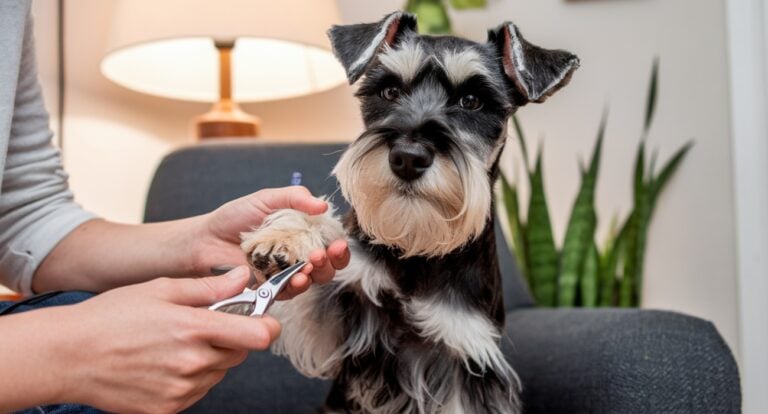
Help your anxious Schnauzer find their confidence with gentle strategies that soothe nerves and turn stress into happy, fearless adventures together.
Does your Schnauzer turn into a trembling mess during thunderstorms? Maybe they bark frantically when you grab your car keys, or perhaps they’ve decided that the mailman is public enemy number one. You’re not alone! Schnauzers, despite their bold beards and confident strut, can be surprisingly anxious little souls. These intelligent dogs were bred to be alert watchdogs, which means their brains are hardwired to notice everything. Sometimes that superpower becomes their kryptonite.
The good news? Anxiety doesn’t have to rule your Schnauzer’s life (or yours). With patience, consistency, and the right strategies, you can help your fuzzy friend transform from a nervous wreck into a calm, confident companion.
1. Create a Sacred Safe Space
Every anxious Schnauzer needs their own personal fortress of solitude. This isn’t just about tossing a dog bed in the corner and calling it a day. We’re talking about a dedicated anxiety relief zone that becomes your dog’s emotional sanctuary. Choose a quiet spot away from household traffic, preferably somewhere cozy like a closet or under a sturdy table.
Load this space with your Schnauzer’s favorite blanket (bonus points if it smells like you), some beloved toys, and maybe a piece of worn clothing. The goal is creating an environment where your dog can retreat when the world feels overwhelming. Some Schnauzers benefit from covered crate spaces that feel like dens, while others prefer open beds where they can keep watch. Pay attention to your dog’s preferences and adjust accordingly.
A safe space isn’t where you send your dog during timeouts. It’s where they voluntarily choose to go when they need emotional regulation.
2. Master the Art of Desensitization
Desensitization sounds fancy, but it’s just gradual exposure to scary stuff at a level your Schnauzer can handle. Terrified of the vacuum cleaner? Start by leaving it in the room (turned off) while your dog gets treats nearby. Over days or weeks, gradually increase the intensity: move it slightly, turn it on in another room, then closer, until eventually it’s no big deal.
The secret sauce here is moving at your dog’s pace, not yours. Pushing too fast will backfire spectacularly. If your Schnauzer shows stress signals (panting, pacing, whale eye, tucked tail), you’ve moved too quickly. Back up a step and spend more time at that level before progressing.
3. Exercise Their Body AND Brain
A tired Schnauzer is a calm Schnauzer, but we’re not just talking about physical exhaustion. These brainy little beasts need mental stimulation like humans need coffee. A 20 minute sniffy walk where your dog can investigate every fascinating smell does more for anxiety than an hour of mindless trotting.
Puzzle toys, hide and seek games, and training sessions all count as mental exercise. Try hiding treats around the house, teaching new tricks, or practicing scent work. The combination of physical and mental tiredness creates the perfect recipe for a relaxed pup. Aim for at least 30 to 60 minutes of combined activity daily, adjusted for your Schnauzer’s age and health.
4. Investigate Anxiety Wraps and Compression
Anxiety wraps work on the same principle as swaddling a baby or why weighted blankets help humans relax. The gentle, constant pressure can have a calming effect on many dogs by providing a sense of security. Products like Thundershirts have helped countless anxious Schnauzers, particularly during storms or fireworks.
Here’s what works: introduce the wrap during calm times first so your dog associates it with positive experiences, not just scary situations. Put it on, give treats, play for a few minutes, then remove it. Once your Schnauzer sees the wrap as neutral or positive, it’ll be more effective during actual anxiety triggers. Not every dog responds to compression therapy, but it’s low risk and worth trying.
5. Establish Predictable Routines
Schnauzers are creatures of habit who find comfort in predictability. When life follows a consistent pattern, there are fewer surprises to trigger anxiety. Feed meals at the same times, take walks on a regular schedule, and create bedtime rituals that signal it’s time to relax.
This doesn’t mean you can never deviate from the schedule, but having a baseline routine provides structure that anxious dogs crave. Your Schnauzer will learn what to expect and when, which reduces overall stress levels. Even something as simple as always putting on your shoes in the same order before walks can become a comforting ritual.
| Daily Routine Element | Anxiety Benefit | Implementation Tip |
|---|---|---|
| Consistent meal times | Reduces food-related stress | Feed within same 30-minute window daily |
| Regular walk schedule | Provides predictable exercise outlet | Same times and routes when possible |
| Bedtime ritual | Signals winding down for sleep | Include calming activities like gentle brushing |
| Training sessions | Builds confidence through mastery | Short 5-10 minute sessions at same time |
6. Try Calming Supplements and Aromatherapy
The supplement world for anxious dogs has exploded, and some options show real promise. L-theanine, chamomile, and CBD products formulated for dogs have helped many Schnauzers take the edge off their anxiety. Always consult your vet before starting any supplement, especially if your dog takes other medications.
Aromatherapy using lavender or chamomile scents can also promote relaxation. You can use pet-safe diffusers or sprays designed specifically for dogs. Just remember that canine noses are incredibly powerful, so less is definitely more. Never apply essential oils directly to your Schnauzer’s skin or use human products, as these can be toxic to dogs.
7. Practice Departure Desensitization for Separation Anxiety
Separation anxiety is brutally common in Schnauzers who love their humans with intense devotion. The solution requires patience and systematic desensitization to your departure cues. Start by picking up your keys and sitting back down. Put on your coat, then take it off. Open and close the door without leaving.
Once your dog stays calm through these actions, progress to leaving for 10 seconds, then 30 seconds, gradually building duration. The goal is teaching your Schnauzer that departures are boring and you always come back. This process takes weeks or months, not days, but it’s incredibly effective for most dogs when done correctly.
Your Schnauzer’s separation anxiety isn’t spite or revenge. It’s genuine panic that you’ve disappeared forever and might never return.
8. Utilize Background Noise
Silence can actually amplify anxiety for some Schnauzers because every little sound becomes noticeable and potentially threatening. Playing calming music, white noise, or leaving the TV on provides acoustic camouflage that masks startling sounds like neighbors’ doors slamming or cars backfiring.
There are even music services designed specifically for anxious dogs, featuring tempos and frequencies shown to promote canine relaxation. Through a Dog’s Ear and similar programs have research backing their effectiveness. Experiment with different options to find what works best for your particular pup.
9. Socialize Strategically
Poor socialization often underlies anxiety toward other dogs or people. However, “fixing” this doesn’t mean forcing your Schnauzer into overwhelming situations. Strategic socialization means controlled, positive experiences at your dog’s comfort level.
Start with calm, well-behaved dogs in neutral territory. Keep initial interactions brief and positive, ending before your Schnauzer shows stress. Gradually increase difficulty as confidence builds. Puppy or adult socialization classes led by qualified trainers using positive methods can be incredibly valuable. Never punish fearful behavior, as this confirms your dog’s suspicion that the scary thing really IS dangerous.
10. Consider Professional Training and Behavior Modification
Sometimes anxiety is complex enough that professional help makes sense. A certified dog behaviorist or veterinary behaviorist can assess your Schnauzer’s specific issues and create a customized behavior modification plan. They’ll identify triggers you might miss and teach you techniques tailored to your situation.
Look for trainers who use science-based, reward-focused methods rather than dominance-based approaches. Punishment and “corrections” will absolutely make anxiety worse. Certifications to look for include CBCC-KA, CDBC, or DACVB. Yes, professional help costs money, but it’s usually cheaper than replacing destroyed furniture or dealing with stress-related health issues.
11. Investigate Medication When Appropriate
There’s no shame in the medication game when it comes to severe anxiety. For some Schnauzers, anxiety is so overwhelming that they can’t even engage in behavior modification without pharmaceutical support. Modern anti-anxiety medications for dogs are safe and effective when properly prescribed and monitored.
Your vet might suggest daily medications like fluoxetine for generalized anxiety or situational medications like trazodone for specific events like vet visits or thunderstorms. Medication isn’t giving up; it’s providing your dog the neurochemical support they need to function comfortably. Often, medication combined with behavior modification works better than either approach alone.
Medication doesn’t replace training, but it can create a mental state where training is actually possible.
12. Teach Relaxation as a Skill
Most people don’t realize that calmness is something you can actively teach. The “Relaxation Protocol” developed by Dr. Karen Overall trains dogs to settle on cue through gradually increasing durations and distractions. You systematically reward your Schnauzer for lying calmly on a mat while you do increasingly stimulating things like walking around, opening doors, or jumping.
Start easy (reward for lying down for 5 seconds) and slowly build difficulty. Eventually, your Schnauzer learns that remaining calm earns rewards no matter what’s happening around them. This creates a default behavior of relaxation rather than reactivity. The protocol takes weeks to complete but creates lasting changes in how your dog responds to the environment.
13. Address Your Own Energy and Emotions
Here’s an uncomfortable truth: your anxiety feeds your Schnauzer’s anxiety. Dogs are incredibly perceptive to human emotional states, and your nervous energy confirms their suspicion that something IS wrong. If you tense up when another dog approaches or frantically comfort your Schnauzer during thunderstorms, you’re accidentally reinforcing their fear.
This doesn’t mean being cold or ignoring your dog’s distress. It means projecting calm confidence that tells your Schnauzer everything is under control. Practice relaxation techniques for yourself, breathe normally during triggering situations, and reward brave behavior rather than fearful behavior. Sometimes the most powerful thing you can do for your anxious Schnauzer is managing your own stress response.