Busting common Schnauzer myths—see which old beliefs you still have and get the facts you need as a savvy dog owner.
Schnauzers strut around with their distinguished beards and eyebrows like tiny professors who’ve just solved the universe’s greatest mysteries. But here’s the thing: most of what you think you know about these bearded beauties is about as accurate as a weather forecast written by a goldfish. These dogs have been the subject of more misconceptions than possibly any other breed, and it’s time to separate the whiskers from the myths.
Whether you’re a longtime Schnauzer parent or considering adding one of these characterful canines to your family, you’ve probably heard the rumors. They’re hypoallergenic! They don’t shed! They’re mean! Spoiler alert: the truth is way more interesting (and complicated) than the legends suggest.
1. Schnauzers Are Completely Hypoallergenic
Here’s the myth that won’t die: Schnauzers are the magical solution for anyone with dog allergies. People desperately want this to be true, but biology doesn’t care about our wishes.
No dog is truly hypoallergenic. The term itself is misleading marketing gold. What people react to isn’t actually dog hair but proteins found in dander (dead skin cells), saliva, and urine. Schnauzers produce these allergens just like every other dog on the planet.
That said, Schnauzers are considered low-shedding dogs, which means less hair floating around your house carrying dander. Their wiry double coat tends to trap loose hair rather than releasing it into your environment. This makes them a better choice for allergy sufferers compared to Golden Retrievers or German Shepherds, but not a guarantee of symptom-free living.
If you have allergies, spend time with Schnauzers before committing. Your immune system might react differently to individual dogs, even within the same breed.
2. Schnauzers Don’t Shed At All
Building on the previous myth, many people believe Schnauzers are completely shed-free. This misconception probably comes from the fact that you won’t see tumbleweeds of Schnauzer fur rolling across your floors.
The truth is more nuanced. Schnauzers do shed, just minimally. Their double coat consists of a soft undercoat and a wiry topcoat. When hair falls out, it often gets trapped in the surrounding coat rather than landing on your furniture. This is fantastic for your vacuum cleaner but requires regular grooming to prevent matting.
Without proper brushing and professional grooming every 6-8 weeks, that trapped hair turns into tangles and mats. So while you might not see much shedding, you’re trading tumbleweeds for grooming appointments. Choose your battle wisely.
3. All Three Schnauzer Sizes Have Identical Personalities
Miniature, Standard, and Giant Schnauzers share a name and some physical characteristics, but treating them as personality clones is a mistake. They’re actually quite different dogs developed for distinct purposes.
Miniature Schnauzers were bred from Standard Schnauzers mixed with smaller breeds like Affenpinschers and Poodles. They’re spunky, alert, and often more vocal. Standard Schnauzers are the original version, bred as versatile farm dogs with balanced temperaments. Giant Schnauzers were developed for driving cattle and later for guard work, making them more intense and requiring experienced handling.
| Schnauzer Type | Original Purpose | Energy Level | Training Difficulty |
|---|---|---|---|
| Miniature | Ratting, companion | Moderate to High | Easy to Moderate |
| Standard | Farm work, guarding | Moderate | Moderate |
| Giant | Cattle driving, guarding | Very High | Moderate to Difficult |
Assuming your neighbor’s friendly Miniature Schnauzer means you’re ready for a Giant Schnauzer is like assuming a housecat prepares you for a lion.
4. Schnauzers Are Naturally Aggressive
This myth probably stems from their alert, protective nature and those intense facial expressions. Yes, Schnauzers were originally bred as guard dogs and ratters, which required courage and tenacity. But aggression? That’s nurture, not nature.
A properly socialized Schnauzer is confident, spirited, and watchful but not aggressive. They’re naturally suspicious of strangers (that’s literally their job description as guard dogs), which some people misinterpret as hostility. The key difference: a well-bred, well-raised Schnauzer assesses situations and responds appropriately. An aggressive dog reacts without discernment.
Problems arise when owners either encourage protective behavior too enthusiastically or fail to socialize their Schnauzer properly during the critical puppy months. Any dog can become fear-aggressive or territorially aggressive with poor training and socialization. Schnauzers are simply more vocal about their concerns, which makes their warnings more noticeable.
5. Schnauzers Are Easy Dogs For First-Time Owners
Sure, Schnauzers are intelligent and devoted, which sounds perfect for beginners. But intelligence in dogs is a double-edged sword that can slice through your patience faster than you can say “obedience class.”
Smart dogs get bored easily. Bored Schnauzers become destructive, noisy, and creative in ways you won’t appreciate. They need mental stimulation, consistent training, and a human who can outsmart them (good luck with that). They’re also stubborn when they decide your request doesn’t align with their interests.
Additionally, Schnauzers have strong prey drives, can be territorial, and require significant grooming. They’re not nightmare dogs, but they’re definitely not Golden Retrievers either. First-time owners succeed with Schnauzers, but only when they’re committed to research, training, and staying one step ahead of a dog who’s always plotting something.
6. The Schnauzer Cut Is Just For Looks
That distinctive Schnauzer trim with the long beard, eyebrows, and leg furnishings isn’t purely aesthetic vanity. The clip actually has practical origins rooted in the breed’s working history.
Schnauzers originally had their bodies clipped short to allow easier movement through brush and undergrowth while hunting rats and guarding property. The leg furnishings were left longer to protect legs from scratches and bites. The facial hair protected their faces during confrontations with vermin. Even that funny-looking topknot served a purpose: making the dog’s head appear larger and more intimidating.
Today, most Schnauzers are companions rather than working dogs, but the traditional clip helps manage their unique double coat. The wiry outer coat doesn’t shed easily and continues growing, so regular trimming prevents matting and keeps the dog comfortable.
7. Schnauzers Love Everyone
Walk into some Schnauzer owner forums, and you’d think these dogs are furry diplomats spreading joy to all humanity. The reality is far more selective.
Schnauzers are typically devoted to their family but range from indifferent to suspicious toward strangers. They’re one-family dogs by design. This isn’t a flaw; it’s a feature that made them excellent property guardians. They needed to distinguish between family members and potential threats.
Don’t expect your Schnauzer to enthusiastically greet your houseguests like a Golden Retriever hosting a party. They’re more like security guards checking credentials before allowing entry.
Some Schnauzers warm up to regular visitors. Others maintain professional distance indefinitely. This trait makes them excellent watchdogs but challenging if you run an Airbnb or host weekly dinner parties.
8. Schnauzers Don’t Need Much Exercise
Those short legs and compact bodies fool people into thinking Schnauzers are couch potatoes. Wrong. These dogs were bred for stamina and work, not for matching your Netflix-binging lifestyle.
Miniature Schnauzers need at least 45-60 minutes of exercise daily. Standards and Giants require even more. We’re talking real exercise too, not just a waddle around the block. They need walks, play sessions, training activities, and mental challenges. Without adequate exercise, you’ll discover exactly how creative a bored Schnauzer can be with your furniture, shoes, and sanity.
Their terrier heritage means they have energy reserves that seem to violate the laws of physics. That energy will come out somehow. You can channel it into positive activities, or you can watch it manifest as barking, digging, and general mayhem. Your choice.
9. All Schnauzers Are Barkers
Yes, Schnauzers are vocal. They were literally bred to sound alarms when strangers approached or when they detected vermin. But claiming all Schnauzers are excessive barkers ignores both individual personality and training.
Some Schnauzers are chattier than others based on genetics, just like some people are naturally more talkative. But barking behavior is also heavily influenced by training, socialization, and environment. A Schnauzer raised with clear communication, proper stimulation, and boundaries learns when barking is appropriate versus unnecessary.
The problem is that many owners inadvertently reinforce barking behavior. Shouting at a barking dog (which the dog interprets as you joining the barking), giving attention when they bark, or failing to provide an alternative communication method all contribute to a noisier dog. Train your Schnauzer properly, and you’ll have an alert watchdog, not a neighborhood noise complaint waiting to happen.
10. Schnauzers Can’t Live With Other Pets
This myth probably originated from the Schnauzer’s strong prey drive and terrier tenacity. It’s true that Schnauzers were bred to hunt and kill rats, which doesn’t sound promising for your hamster’s life expectancy.
However, proper socialization changes everything. Schnauzers raised with other animals from puppyhood typically coexist peacefully with cats, other dogs, and even smaller pets. The key word is raised with rather than introduced to adult prey animals later.
That said, their prey drive doesn’t simply vanish. A Schnauzer who lives harmoniously with your cat might still chase the neighbor’s cat. They’re capable of making distinctions (“this cat is family, that squirrel is fair game”), but it requires consistent training and management. Never leave Schnauzers unsupervised with small pets unless you’re 100% confident in their relationship.
11. Schnauzers Don’t Need Professional Grooming
The “I can totally groom my Schnauzer at home” myth costs people time, money, and sometimes results in very apologetic calls to professional groomers.
Schnauzer coats require specialized care. The traditional hand-stripping method (pulling out dead outer coat hair by hand or with a stripping knife) maintains the wiry texture and vibrant color. Clipper cutting is faster and cheaper but gradually softens the coat and alters coloring. Most pet owners opt for clipping, which is perfectly fine for companion dogs.
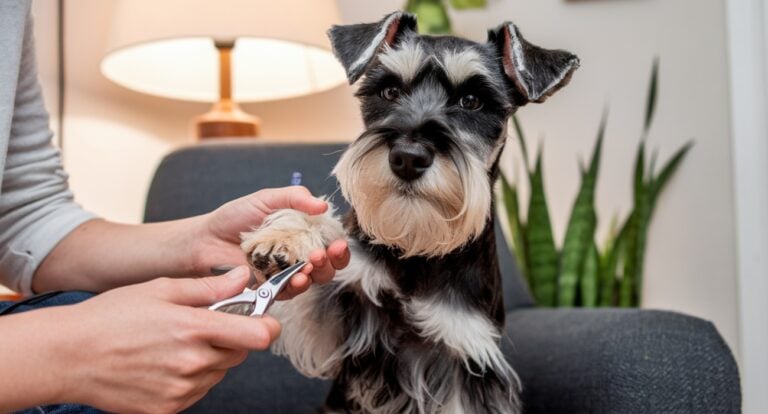
Regardless of method, Schnauzers need professional grooming every 6-8 weeks. Between appointments, they require regular brushing (several times weekly) to prevent matting, especially in the leg furnishings and beard. Their beards also need daily attention since they function as food catchers, water sponges, and general dirt magnets.
12. Schnauzers Are Rare And Difficult To Find
Some people treat Schnauzers like unicorns, believing they’re exotic rarities requiring international searches. In reality, Schnauzers (especially Miniatures) are quite popular and readily available.
The AKC consistently ranks Miniature Schnauzers in the top 20 most popular breeds in the United States. Standard and Giant Schnauzers are less common but far from impossible to find. Reputable breeders exist across the country, and Schnauzer-specific rescues operate in most regions.
The confusion might stem from people wanting a Schnauzer with specific characteristics: particular color, size, lineage, or temperament. Finding your ideal individual dog might take time, but finding a Schnauzer is relatively straightforward. Always prioritize responsible breeders or rescues over availability. A well-bred, properly socialized Schnauzer from a waitlist beats a poorly bred one available immediately.
13. Schnauzers Make Perfect Apartment Dogs
Their moderate size makes Schnauzers seem ideal for apartment living, and many marketing materials promote this advantage. They can thrive in apartments, but calling them perfect for this lifestyle oversimplifies their needs.
Remember that exercise requirement from Myth #8? It doesn’t disappear just because you live in 800 square feet. Apartment Schnauzers need committed owners who provide adequate physical and mental stimulation regardless of living space. They also need training to minimize alert barking, which can create neighbor conflicts in close quarters.
Additionally, Schnauzers are social dogs who don’t appreciate being left alone for 10-hour workdays. They can develop separation anxiety or destructive behaviors when isolated too long. Apartment living works brilliantly for Schnauzers with active, attentive owners who are home frequently. It works terribly for Schnauzers whose owners treat them like low-maintenance furniture.