Keep their minds sharp and curiosity alive. These 12 brilliant techniques challenge your German Shepherd and prevent boredom fast.
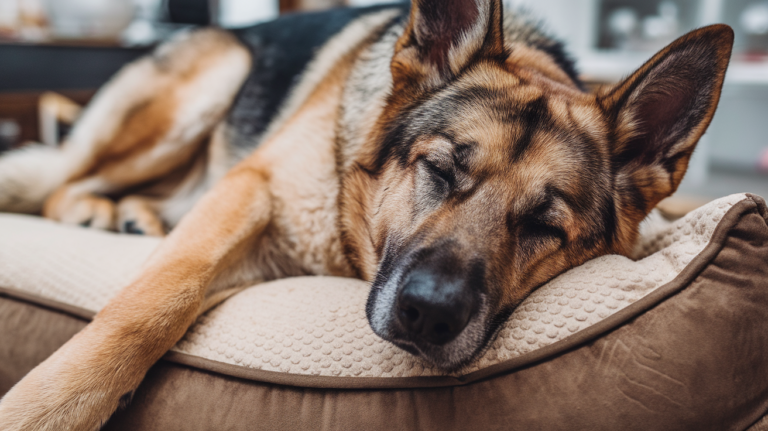
You’re sitting peacefully with your morning coffee when you hear it. That suspicious silence from the other room. You know the one. It’s the kind of quiet that means your German Shepherd has either fallen asleep or is currently engineering the destruction of something you love.
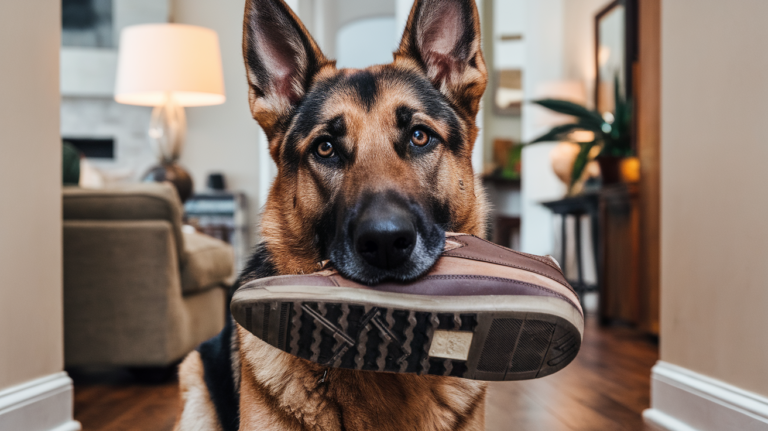
German Shepherds rank among the most intelligent dog breeds on the planet, sitting comfortably in the top three alongside Border Collies and Poodles. But intelligence without engagement is like having a Ferrari and never taking it out of the garage. Worse, actually, because your Ferrari won’t eat your shoes when it gets antsy. These dogs need mental workouts just as much as physical ones, and today we’re diving into twelve fantastic ways to give that gorgeous brain exactly what it craves.
1. Master the Art of Puzzle Feeders
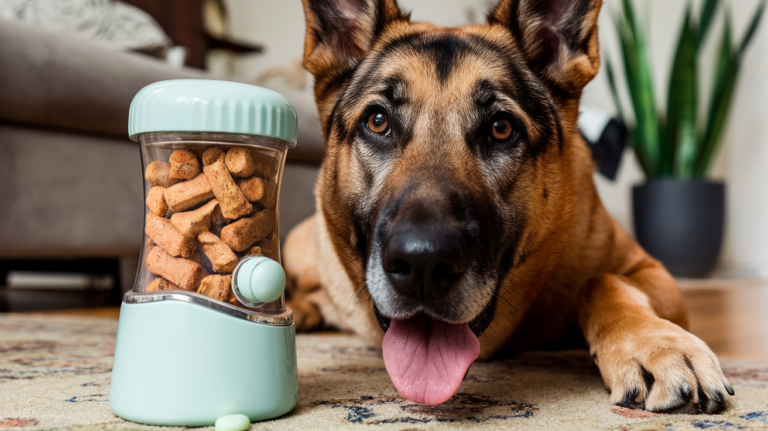
Forget tossing kibble in a bowl like some kind of peasant. Your German Shepherd’s mealtime should be an Olympic event for the brain. Puzzle feeders transform eating from a 30 second inhale fest into a legitimate cognitive challenge that keeps those neurons firing.
Start simple with basic treat dispensing balls, then graduate to complex puzzle boards with multiple compartments and sliding pieces. The beauty here is watching your dog think through the problem, trying different approaches, learning cause and effect. It’s like Sudoku, but with the reward being actual food instead of just smug satisfaction.
Pro tip: Rotate between different puzzle types to prevent your clever pup from just memorizing the solution. You want them problem solving fresh each time, not just going through the motions on autopilot.
2. Introduce Scent Work and Nose Games
German Shepherds have roughly 225 million scent receptors compared to your pathetic 5 million. Not using that superpower is basically criminal negligence of your dog’s natural talents.
Hide treats around your house, yard, or even in a specific room. Start obvious, then get diabolically creative. Inside shoe tongues, under furniture legs, tucked into plant pots (non toxic plants only, obviously). Watch as your shepherd transforms into a furry detective, methodically working the room with the focus of someone defusing a bomb.
Mental stimulation through scent work taps into your German Shepherd’s deepest instincts, providing satisfaction that goes beyond simple physical exercise. It’s not just activity; it’s purpose.
You can even create scent discrimination games where they learn to identify specific scents among distractions. Tennis ball scented with vanilla? Find it among ten identical looking balls scented with different extracts. This is the kind of challenge that leaves them mentally exhausted in the best possible way.
3. Teach New Tricks Beyond the Basics
Sit, stay, come… yawn. Your German Shepherd learned those before their first birthday. Time to level up into trick territory that actually requires brainpower.
Think multi step behaviors: opening doors, fetching specific items by name, turning lights on and off (yes, really), or my personal favorite, putting their toys away in a designated bin. These complex tricks require your dog to understand sequences, remember names, and execute precise movements. It’s basically canine calculus.
The learning process itself is the workout. Breaking down a complex behavior into small, teachable steps, then linking them together, creates neural pathways and strengthens that magnificent brain. Plus, the look on your friends’ faces when your dog casually closes the refrigerator door? Priceless.
4. Create an Obstacle Course Adventure
Physical activity is great, but an obstacle course engages both body and mind simultaneously. Your German Shepherd has to assess each challenge, figure out the approach, and execute with precision.
| Obstacle Type | Mental Challenge | Difficulty Level |
|---|---|---|
| Weave Poles | Coordination & Pattern Recognition | Beginner |
| Tunnel Navigation | Spatial Awareness & Confidence | Beginner |
| A-Frame Climb | Problem Solving & Body Awareness | Intermediate |
| Teeter-Totter | Balance & Impulse Control | Intermediate |
| Pause Table | Self Control & Focus | Advanced |
You don’t need fancy agility equipment. Pool noodles stuck in the ground for weaving, a children’s play tunnel, a sturdy plank propped on bricks… get creative. Change the course layout regularly so they can’t just memorize the pattern. Make them think about what comes next.
5. Play the Name Game with Toys
This one sounds deceptively simple but delivers serious mental mileage. Teach your German Shepherd the names of their toys. Not just “ball” either – we’re talking “blue ball,” “squeaky penguin,” “rope toy,” “tennis ball.” Get specific.
Start by working with one toy at a time. Say the name, reward interaction with that specific toy, repeat until they’ve got it. Then introduce a second toy and practice discrimination (which one is which?). Eventually, you’ll have a dog who can select “squeaky penguin” from a pile of fifteen toys on command.
The working memory required for this task is substantial. They’re storing vocabulary, creating associations, and exercising recall. It’s like flashcards, except your German Shepherd is way more enthusiastic about it than you ever were in school.
6. Implement Food Dispensing Treasure Hunts
Combine scent work with foraging instincts by hiding portions of your dog’s meal around your space. Instead of one boring bowl in one boring location, their food becomes a scavenger hunt that requires genuine effort.
Start in one room with treats placed in obvious locations. As your shepherd gets the hang of it, expand the territory and increase difficulty. Elevation changes are particularly good – treats on chairs, shelves (that they can reach safely), stairs. They’ll need to check high, check low, remember where they’ve already searched.
This taps into natural foraging behaviors that all dogs possess but rarely get to express. In the wild, no wolf ever found all their food conveniently piled in one spot twice daily. Making your German Shepherd work for meals creates mental satisfaction that bowl feeding simply cannot provide.
7. Introduce Interactive Technology and Games
Welcome to the 21st century, where dogs have apps. Seriously. Tablet games designed specifically for dogs can provide legitimate mental stimulation, especially on days when weather keeps you inside.
These games typically involve tapping or pawing at moving objects on screen, catching fish, popping bubbles, or tracking moving items. Your tech savvy shepherd learns cause and effect (I paw this, something happens), improves their tracking skills, and stays engaged.
Caveat: This should supplement, not replace, other forms of enrichment. Think of it like letting your kid play educational iPad games… great in moderation, problematic as the only activity. Mix it in with the rest of these strategies for a well rounded approach.
8. Practice Impulse Control Through “Wait” Games
Mental sharpness isn’t just about doing things; it’s also about not doing things when every fiber of their being wants to. Impulse control exercises strengthen the prefrontal cortex, improving overall behavior and decision making.
Place a treat on your dog’s paw or nose and make them wait for release. Start with two seconds, build to thirty, then a minute. Put their favorite toy on the ground and practice “leave it” while walking past. The mental strain of resisting temptation when it’s right there creates real cognitive development.
The ability to delay gratification and exercise self control separates a well trained dog from a reactive one. These exercises quite literally change how your German Shepherd’s brain processes decisions.
Advanced version: Create a trail of treats leading to their bowl, but they can’t eat any until you give permission. Watch those ears pin back with concentration as they navigate temptation alley.
9. Rotate Toy Access Strategically
Having all toys available all the time means none of them are special. Your German Shepherd gets bored with their options, everything becomes background noise, and suddenly your shoes look fascinating by comparison.
Divide toys into three or four groups and rotate weekly. Week one might feature rope toys and squeaky toys. Week two brings out the puzzle toys and plushies. This keeps everything feeling novel and interesting, making independent play more likely.
When that “new” toy (which is actually just temporarily retired) comes back into rotation, your dog approaches it with renewed interest. It’s like Netflix constantly adding and removing shows, except your German Shepherd doesn’t get annoyed about it because they can’t use Twitter.
10. Master the Shell Game
Remember those street cons with cups and a ball? That’s quality brain training for your shepherd. Start with three cups, hide a treat under one while your dog watches, shuffle them around, and let them indicate which one holds the prize.
This engages working memory (tracking the treat’s location), problem solving (figuring out which cup to choose), and impulse control (waiting for permission instead of just knocking all the cups over immediately). As they improve, increase the number of cups, speed up your shuffling, or add more complex patterns.
The concentration required is intense. You’ll actually see your dog’s focus sharpen as they lock onto the cups, tracking movement with the intensity of a hawk watching a field mouse.
11. Engage in Regular Training Sessions
Here’s something counterintuitive: short training sessions done frequently beat marathon training sessions done rarely. Your German Shepherd’s brain needs consistent engagement, not occasional intensive bootcamps.
Aim for three to five sessions daily, each lasting just five to ten minutes. Work on whatever skill you’re developing, whether that’s advanced obedience, trick training, or behavioral refinement. The consistency creates habit, strengthens learning, and keeps their mind primed for problem solving throughout the day.
Think of it like going to the gym. You wouldn’t work out for six hours once a month and expect good results. Same principle applies to your dog’s cognitive fitness. Little and often wins the race.
12. Set Up Socialization and New Experiences
Mental sharpness requires novelty. Same house, same yard, same walk route… it all becomes white noise eventually. Your German Shepherd needs new inputs to process, analyze, and learn from.
Regular socialization with other dogs provides complex social problem solving. Reading body language, negotiating play styles, establishing appropriate boundaries… it’s sophisticated cognitive work. Different environments (pet friendly stores, parks, outdoor cafes) expose them to new sights, sounds, and smells that demand mental processing.
Even something as simple as driving to a new neighborhood for your daily walk creates cognitive challenges. New territory means new scents to catalog, new landmarks to remember, new routes to navigate. Your shepherd’s brain lights up like a Christmas tree processing all that fresh information.
Remember: A mentally stimulated German Shepherd is a happy, well behaved, and deeply satisfied dog. These aren’t just tricks to keep them busy; they’re essential maintenance for that incredible brain sitting behind those soulful eyes. Mix and match these strategies, stay consistent, and watch your furry genius thrive in ways you didn’t think possible. Your couch (and your sanity) will thank you.