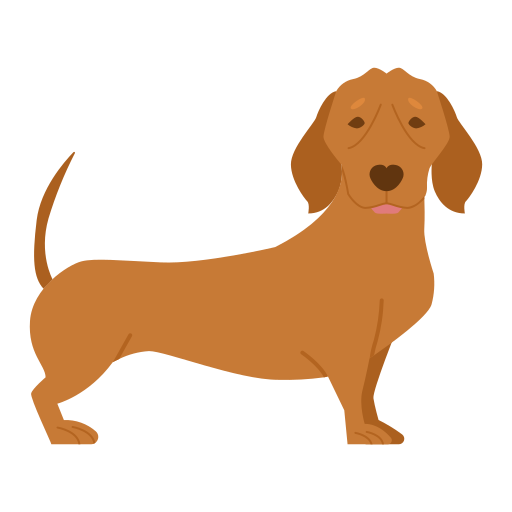
 Dachshund
 Coming home to a dachshund who lifts her head off the couch cushion, yawns at you, and goes straight back to sleep. That’s the whole goal. No shredded mail on the entryway rug. No neighbor texting to ask if everything is okay because the barking started around 9:15 and, as far as they can tell, never actually stopped.
Just a smug little sausage who had a full day of her own and doesn’t feel the need to interrogate you about yours.
Dachshunds make this harder than most breeds, and honestly, they do it on purpose. They were bred to go underground alone and make decisions without human input, which means a bored doxie isn’t sitting around feeling sad. She’s working. She has identified a project, and that project is your baseboards.
Eight or nine hours is a genuinely long time for a dog whose entire genetic résumé reads find the thing, dig to the thing, yell at the thing. But the same stubborn wiring that makes them destructive also makes them shockingly easy to entertain, as long as you hand them a real job before you walk out the door.
Here are ten that actually work.
1. Build a Digging Box She’s Allowed to Destroy
Your dachshund is going to dig. That part is not negotiable. The only variable is whether she does it in a designated box or in the corner of your mattress.
Grab a shallow plastic bin or a cheap kiddie pool. Fill it with shredded paper, old fleece scraps, or play sand if you have outdoor space.
Then bury things in it. Treats, a squeaky toy, a knotted sock with a biscuit inside.
Make It Harder Over Time
Start with items barely covered so she gets the idea fast. Within a week you can bury things deep, and she’ll spend twenty solid minutes excavating like a tiny archaeologist with a grudge.
2. Freeze Her Breakfast Instead of Serving It
A bowl of kibble takes ninety seconds to eat. A frozen puzzle takes forty minutes.
Pack a rubber toy with wet food, plain yogurt, mashed banana, or soaked kibble, then freeze it overnight. Hand it over as you’re grabbing your keys.
A dog who has to work for calories burns more mental energy in thirty minutes than a dog who walks politely around the block for an hour.
The leaving-the-house moment is also the most anxious part of her day, so pairing it with something delicious quietly rewires how she feels about the door closing.
3. Rotate Toys Like a Museum Curator
Ten toys on the floor at all times equals zero interesting toys.
Split her collection into three or four groups. Keep one group out, hide the rest in a closet, and swap them every week or so.
The toys she ignored in March will feel brand new in April. Dachshunds have excellent noses and questionable memories, which is a combination that works entirely in your favor here.
4. Set Up a Window Perch, or Block the Window Completely
This one depends enormously on your specific dog, and you already know which type you have.
Some doxies find window watching genuinely enriching. Birds, squirrels, the mail carrier, the neighbor’s cat doing something suspicious. It’s dog television.
Others escalate. They spot movement, they alert, they get more wound up with every passing car, and by noon they’ve barked themselves hoarse over a leaf.
How to Tell Which One You Have
Set up a camera for one workday and just watch. If she’s relaxed and observing, give her a proper perch with a cushion. If she’s pacing and vocalizing, frost the lower half of the glass or move her setup to an interior room.
5. Scatter Feed Before You Leave
Forget the bowl entirely a few days a week.
Toss her portion across a rug, into a snuffle mat, or around a dog-safe room in small handfuls. Sniffing is deeply calming for dogs, and dachshunds are scent hounds at their core.
Twenty minutes of nose work leaves them satisfied in a way that a sprint around the yard never quite does.
6. Give Her a Long-Lasting Chew That Isn’t Junk
Chewing releases tension. That’s not a metaphor, it’s physiology.
Look for options that hold up: a stuffed hoof, a bully stick in a safety holder, a rubber chew designed for aggressive chewers. Skip rawhide and skip anything that splinters.
Size matters more with this breed than people expect. Long backs and short jaws mean you want something she can settle with comfortably rather than wrestle.
7. Use Sound on Purpose
Silence makes noises outside louder and scarier. A little background audio smooths all of that out.
Classical music and reggae both test well for lowering canine stress markers, which sounds like a joke but isn’t. Talk radio works too, since human voices feel like company.
Absolute silence isn’t peaceful for a dog left alone. It’s just an empty room where every footstep in the hallway sounds like an intruder.
Set the volume low, somewhere around normal conversation level. You’re covering the sharp edges of outside noise, not drowning them out.
8. Hide Treats Around the Room Before You Walk Out
Ninety seconds of prep, hours of payoff.
Tuck small treats under a blanket edge, behind a chair leg, inside a cardboard tube, on top of a low stack of books. Vary the spots every day so she can’t just run the same route.
Cardboard Is Your Best Free Toy
Empty tissue boxes, toilet paper tubes, and shipping boxes make excellent puzzle containers. Fold a treat inside a tube, crimp both ends, and let her destroy it.
Yes, you’ll come home to confetti. That’s the trade, and it’s a good one.
9. Break Up the Day If You Possibly Can
Nine unbroken hours is a lot to ask, especially for a young dog or a senior with a smaller bladder.
A midday walker, a neighbor who’s home anyway, a dog-savvy teenager down the street, a lunch break you can occasionally spend at home: any of these resets the clock.
Even a fifteen minute potty break and a quick sniff around the block changes the shape of her afternoon completely.
10. Tire Out Her Brain Before You Leave, Not Just Her Legs
Most people try to exhaust their dachshund with a long morning walk and wonder why she’s still bouncing off the walls at 10 a.m.
Physical exercise builds stamina. You are literally training her to need more of it.
Mental work does the opposite. Ten minutes of training before you leave will settle her far more effectively than a thirty minute march.
What Ten Minutes Looks Like
Run through sit, down, and stay with real treats. Teach a new trick in small pieces: spin, touch, bow, go to your bed. Practice her name recall in different rooms.
Ten minutes of thinking will knock a dachshund out cold. Ten minutes of walking will simply make her fitter and more available for chaos.
Then let her nap for a bit before you head out. Dogs that go straight from stimulation to isolation tend to struggle more with the transition, and a short buffer smooths it.
Stack three or four of these together and the day looks different. Frozen puzzle at the door, digging box mid-morning, a chew she finds at some point, treats hidden in six places she has to work out one by one.
She’s busy. She’s using her nose and her brain and those absurd little paws.
And when you finally walk through the door, she’s asleep on her back with her legs in the air, mildly annoyed that you woke her up.