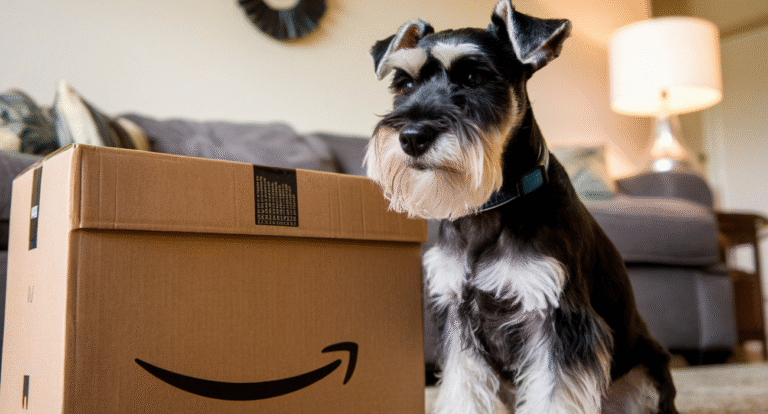
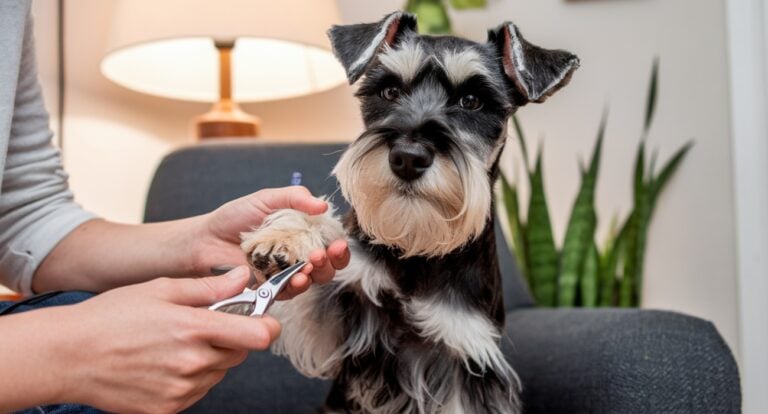
If your Schnauzer hates being left alone, these creative fixes help ease separation stress and make solo time so much easier for them.
Schnauzers weren’t exactly designed for the “independent loner” lifestyle. These dogs thrive on human interaction, and when you disappear, their little bearded brains can spiral into full panic mode.
Maybe your Schnauzer has turned your couch into confetti. Perhaps they’ve perfected an operatic howl that could wake the dead. Or they’ve simply mastered the art of looking so pathetically heartbroken that you feel guilty for going to buy milk. Whatever the symptoms, separation anxiety in Schnauzers is real, and it’s treatable. Let’s explore ten strategies that actually work.
1. Start With Micro Absences
You can’t expect your Schnauzer to go from zero to eight hours alone overnight. Think of it like building muscle; you start small and gradually increase the weight. Begin by stepping outside for literally 30 seconds. Come back in before your dog even realizes you’re gone. No fanfare, no big reunion scene.
Repeat this throughout the day, slowly extending the duration. One minute. Two minutes. Five minutes. Your Schnauzer’s brain needs to learn that your departure doesn’t equal abandonment. When you return and they’re calm (not when they’re jumping and spinning), offer quiet praise. The goal? Making your comings and goings so boring that your dog barely notices them anymore.
The key to beating separation anxiety isn’t dramatic goodbyes or excited returns. It’s making your presence and absence feel completely unremarkable.
2. Create an Irresistible Safe Space
Schnauzers need a den, a sanctuary, a place that screams “safety and comfort.” This might be a crate with plush bedding, a cozy corner with their favorite blanket, or a specific room where good things happen. The crucial part? This space should be exclusively associated with positive experiences.
Feed your Schnauzer special treats only in this location. Hide surprise snacks there. Play calming music nearby. Make it so appealing that your dog actively wants to spend time there, even when you’re home. Never use this space for punishment or time-outs. Over several weeks, your Schnauzer will develop a Pavlovian response: this spot equals relaxation and good vibes.
3. Exercise Before Departure
A tired Schnauzer is a calmer Schnauzer. These energetic dogs were bred to work, and without an outlet for that energy, anxiety fills the void. Before you leave, engage your dog in vigorous physical activity. We’re talking a solid 30 to 45-minute walk, a game of fetch until they’re panting, or a romp at the dog park.
But don’t stop at physical exercise. Mental stimulation exhausts dogs even faster than running. Practice training commands, play hide and seek with treats, or work through a puzzle toy together. When you finally leave, your Schnauzer should be more interested in napping than panicking. Their brain will be too pleasantly exhausted to spiral into worry.
4. Desensitize Departure Cues
Your Schnauzer has learned to read you like a book. They know that keys jangling means you’re leaving. Shoes going on means abandonment is imminent. Your coat coming off the hook triggers a cascade of anxiety. These “departure cues” can set off panic long before you actually leave.
The solution? Randomize these cues throughout the day when you’re not leaving. Put on your shoes and sit on the couch to watch TV. Pick up your keys and walk to the kitchen for a snack. Put on your coat and work at your computer. Do this dozens of times until these actions become meaningless background noise. Your Schnauzer’s anxiety alarm system will gradually deactivate because these cues no longer reliably predict your departure.
| Departure Cue | Desensitization Exercise | Frequency |
|---|---|---|
| Picking up keys | Carry keys around the house, put them down | 10-15 times daily |
| Putting on shoes | Wear shoes indoors for 20 minutes | 3-4 times daily |
| Grabbing coat/bag | Pick up and set down without leaving | 8-10 times daily |
| Standing by door | Walk to door, pause, return to couch | 5-7 times daily |
5. Introduce Puzzle Toys and Food Dispensers
Nothing distracts an anxious brain quite like problem solving combined with food rewards. Puzzle toys and slow-feeder devices give your Schnauzer something engaging to focus on besides your absence. The best part? You can make your departure coincide with something your dog actually looks forward to.
Invest in Kong toys filled with frozen peanut butter and kibble, puzzle feeders that require manipulation to release treats, or snuffle mats where treats hide in fabric folds. Reserve these special items only for when you leave. Your Schnauzer will begin associating your departure with “Oh boy, I get the amazing toy!” rather than “Oh no, I’m being abandoned!” Rotate different toys to keep the novelty factor high.
6. Consider Calming Aids and Supplements
Sometimes Schnauzers need a little extra help taking the edge off their anxiety. Various calming aids can support your training efforts (though they’re never a standalone solution). Adaptil diffusers release dog-appeasing pheromones that mimic what mother dogs produce to comfort puppies. Many Schnauzer owners swear by their effectiveness.
Natural supplements like CBD oil for dogs, L-theanine, or chamomile can promote relaxation without sedation. Calming treats containing ingredients like valerian root or melatonin might help, too. Thundershirts apply gentle, constant pressure that can soothe anxious dogs, similar to swaddling an infant. For severe cases, consult your veterinarian about anti-anxiety medications. There’s absolutely no shame in using pharmaceutical help when your dog’s quality of life is suffering.
Remember: calming aids work best when paired with behavioral modification. They’re the supporting actor, not the star of the show.
7. Establish a Predictable Routine
Schnauzers are creatures of habit who find comfort in predictability. When every day unfolds differently, anxiety has room to flourish. Create a consistent daily schedule for feeding, walks, playtime, and departures. Your dog’s internal clock will adjust, and they’ll know what to expect.
Try to leave and return at similar times each day when possible. If your schedule varies wildly due to work, at least keep the morning routine consistent. Same order of events: wake up, bathroom break, breakfast, walk, then departure. This predictability reduces uncertainty, which is anxiety’s favorite breeding ground. Your Schnauzer can relax into the rhythm of daily life instead of constantly being on high alert.
8. Avoid Emotional Goodbyes and Reunions
This one feels counterintuitive because we love our dogs and want to shower them with affection. But those dramatic, emotional departures and arrivals actually reinforce separation anxiety. When you make a huge production of leaving (“Oh sweetie, Mommy will miss you SO much! Be a good boy! I love you!”), you signal that your departure is indeed a big deal worth worrying about.
Similarly, when you return and immediately engage in an excited reunion (squealing, hugging, letting them jump all over you), you’re teaching your Schnauzer that your absence and presence represent massive emotional swings. Instead, ignore your dog for the first few minutes after you arrive home. Let them calm down completely before acknowledging them with quiet affection. Make your departures equally boring. Just… leave. No eye contact, no petting, no talking. Boring equals safe.
9. Bring in Reinforcements
Your Schnauzer doesn’t necessarily need you specifically; they need companionship, period. If possible, arrange for someone to check on your dog during long absences. A dog walker who stops by midday can break up those endless alone hours into manageable chunks. Your Schnauzer gets exercise, bathroom relief, and social interaction.
Consider doggy daycare a few times per week if your budget allows. Some Schnauzers thrive in pack environments and come home beautifully exhausted. If you work from home occasionally, coordinate your in-office days with a pet sitter visit. You might even explore getting a second dog (though this is a major commitment and won’t work for every household). Sometimes having a companion makes all the difference for an anxious Schnauzer.
| Support Option | Best For | Approximate Cost |
|---|---|---|
| Dog walker (30 min) | Breaking up long days | $20-30 per visit |
| Doggy daycare | Social dogs, full days alone | $30-50 per day |
| Pet sitter visit | Personalized attention | $25-40 per visit |
| Dog camera with treat dispenser | Monitoring and interaction | $100-250 one time |
10. Work With a Professional
If you’ve tried everything and your Schnauzer still shreds your home or injures themselves from anxiety, it’s time to call in an expert. A certified dog behaviorist or veterinary behaviorist can assess your specific situation and create a customized treatment plan. They’ll identify triggers you might have missed and adjust your approach based on your dog’s unique personality.
Professional guidance is especially critical if your Schnauzer’s anxiety has reached dangerous levels (self-harm, extreme destruction, complete inability to settle). These experts have seen hundreds of cases and know exactly which techniques work best for different dogs. Yes, it’s an investment, but so is replacing your furniture repeatedly or dealing with neighbor complaints. Plus, your Schnauzer’s mental health and your peace of mind are worth every penny.
Separation anxiety isn’t a character flaw or a sign you’ve failed as a dog owner. It’s a legitimate psychological challenge that requires patience, consistency, and sometimes professional help to overcome.
Living with a Schnauzer who hates being alone can feel overwhelming, but progress is possible. These ten strategies give you a comprehensive toolkit for helping your bearded companion develop confidence and independence. Start with the easiest fixes first, remain consistent with your efforts, and remember that improvement often happens gradually. Your Schnauzer isn’t trying to make your life difficult; they’re genuinely struggling with something that feels scary and insurmountable to them. With time, patience, and the right approach, those anxious behaviors can transform into calm acceptance. Your neighbors will thank you, your furniture will survive, and most importantly, your Schnauzer will finally be able to relax when you grab those keys.