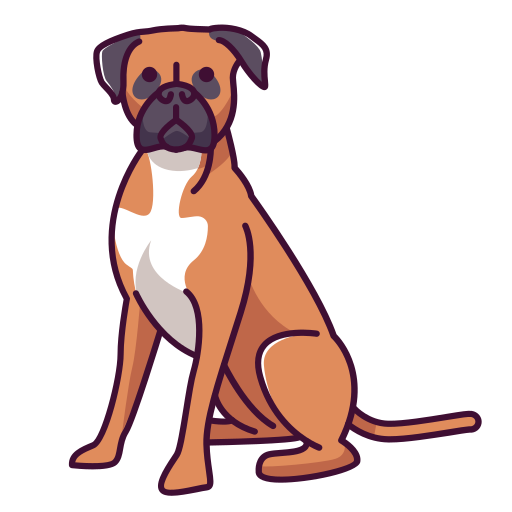
 Boxer
Boxer That soft jingle of collar tags hitting the kitchen floor at 6 a.m. means one thing: your Boxer has parked herself under the counter, chin resting on her paws, eyes locked on the spot where the treat jar lives.
She’s not hungry. She’s hopeful.
And that hopeful little face is exactly how a lot of Boxers end up carrying five, eight, sometimes fifteen extra pounds without anyone quite noticing when it happened.
Boxers hide weight well at first. All that muscle, that deep chest, that squared-off athletic build can disguise a slow creep for months. Then one day you run your hands along her ribs and realize you have to press to find them.
Here’s the thing nobody tells new Boxer owners: this breed is already fighting an uphill battle. Boxers are prone to hip dysplasia, ACL tears, heart conditions, and cancer at higher rates than most breeds. Extra weight makes every single one of those risks worse.
Good news? Boxers respond to weight loss faster than almost any dog out there. They’re built to move. You just have to give them a reason.
1. Actually Weigh the Food (Yes, Every Time)
The scoop is lying to you.
A "cup" of kibble scooped by hand can vary by 30% depending on how you dig into the bag, whether the food settled, and honestly, how generous you’re feeling that morning.
Buy a cheap kitchen scale. Weigh her portion in grams. Do this for two weeks and you’ll be genuinely shocked at how much extra you’ve been handing over without realizing it.
Start From Her Goal Weight, Not Her Current One
Feeding guidelines on the bag are calculated for the dog you want, not the dog you have.
If your Boxer weighs 85 pounds and should weigh 70, feed for a 70 pound dog. That single adjustment often does half the work by itself.
2. Run the Rib Test Weekly
Forget the number on the scale for a second.
Place both hands flat on her sides and slide them back along her ribcage. You should feel each rib with light pressure, similar to running your fingers over the back of your hand.
If you have to push, she’s carrying too much. If the ribs are sharp and visible from across the room, she’s gone too far the other way.
A dog’s waistline tells a more honest story than any scale ever will. Learn to read it, and you’ll never need to guess again.
Do this check every Sunday. Same day, same routine, so you catch drift early instead of six months late.
3. Cut the Treat Calories, Not the Treat Ritual
Boxers are emotional dogs. Taking away treats entirely feels like a punishment to both of you, and honestly, you’ll cave by Wednesday.
Instead, shrink them.
Break a training treat into four pieces. She has no idea the piece got smaller. She just knows she got something, and the ritual is what she actually cares about.
Swap in Vegetables She’ll Actually Eat
Green beans, baby carrots, cucumber slices, and plain frozen green peas are all Boxer approved in most households.
My favorite trick: freeze green beans and hand them over on hot afternoons. Crunchy, cold, nearly zero calories, and she’ll act like she won something.
4. Move Feeding Away From the Table
Table scraps are the silent killer of Boxer waistlines.
A single bite of buttered chicken, a corner of cheese, the last inch of a burger. Individually harmless. Cumulatively? That’s an entire extra meal spread across a week.
Feed her in a separate room during your dinner. It sounds harsh for about three days, then it becomes normal for everybody.
5. Build a Real Exercise Schedule (Not a Vibe)
"She gets plenty of exercise" is something almost every owner of an overweight Boxer says.
Write it down for a week instead. Actual minutes, actual intensity. Most people discover their "hour a day" is closer to twenty minutes of sniffing the same three bushes.
A healthy adult Boxer needs 60 to 90 minutes of genuine activity daily, split into at least two sessions.
Morning Session: Steady and Long
Aim for 30 to 45 minutes at a pace that keeps her trotting, not strolling. If she’s stopping to sniff every four feet, you’re on a smell walk, not a workout.
Both have value. Just don’t confuse one for the other.
Evening Session: Short and Intense
Fifteen minutes of fetch, flirt pole, or hill sprints burns more fat than an hour of ambling.
Boxers are sprinters by design. Play to it.
6. Watch the Heat, Seriously
Brachycephalic breeds and heat are a bad combination, and overweight Boxers handle it even worse.
Exercise before 8 a.m. or after 7 p.m. during summer. Carry water. Watch for that thick, ropey drool and any sign she’s slowing down or lagging behind you.
An overweight Boxer in hot weather is not a dog who needs to try harder. She is a dog who needs a shorter walk and a cooler hour.
If she’s really struggling, swimming is the answer. Zero joint impact, huge calorie burn, and most Boxers turn into absolute maniacs about it once they figure out they float.
7. Use a Slow Feeder or Puzzle Bowl
Boxers inhale food. It’s almost impressive.
A slow feeder bowl or snuffle mat stretches a two minute meal into fifteen. Her brain registers fullness, and she stops giving you that "surely there’s more" stare afterward.
Bonus: puzzle feeders burn mental energy, which for a Boxer is nearly as valuable as physical exercise. A mentally tired Boxer is a calm Boxer, and a calm Boxer isn’t pacing the kitchen begging.
8. Get Everyone in the House on Board
This is where most weight loss plans quietly die.
You’re careful. Your partner slips her half a sandwich. Your kid drops food "accidentally" every single night. Grandma visits and brings bacon.
Put the daily food allowance somewhere visible. A whiteboard on the fridge, a jar with the day’s treats measured out. When the jar is empty, it’s empty.
Make the Rules Boringly Specific
Vague rules fail. "Don’t feed the dog too much" means nothing to a nine year old.
"She gets six treats a day and they’re in this jar" works. Everyone can follow it, and nobody has to guess.
9. Rule Out a Medical Cause First
Before you assume it’s just calories, get bloodwork done.
Hypothyroidism is common in middle aged Boxers and causes weight gain, lethargy, thinning coat, and skin issues. It’s easily managed with daily medication, and no amount of dieting will fix it on its own.
Cushing’s disease, arthritis pain limiting movement, and certain medications can all contribute too.
Weight gain that appears suddenly, without any change in food or activity, is a symptom before it is a habit.
One vet visit rules this out and gives you a safe starting point. Worth every penny.
10. Track It, but Not Obsessively
Weigh her every two weeks, not every day.
Healthy weight loss for a dog is roughly 1 to 2% of body weight per week. For an 80 pound Boxer, that’s about one pound. Slow feels frustrating, but crash dieting causes muscle loss, and muscle is exactly what you’re trying to protect.
Write the numbers down. Take a photo from above and from the side every month, because the visual change often shows up before the scale moves much.
Expect Plateaus and Don’t Panic
Around week six or seven, progress usually stalls. Her metabolism has adjusted to the new intake, and this is completely normal.
Trim another 5% off her food, or add ten minutes to the evening session. Then hold steady and wait.
Plateaus break. They just take longer than you’d like.
Celebrate the Non-Scale Wins
She jumps into the car without hesitating. She lasts the whole walk. She beats you to the top of the stairs again.
Those moments show up before the number does, and they’re the ones that actually tell you it’s working.