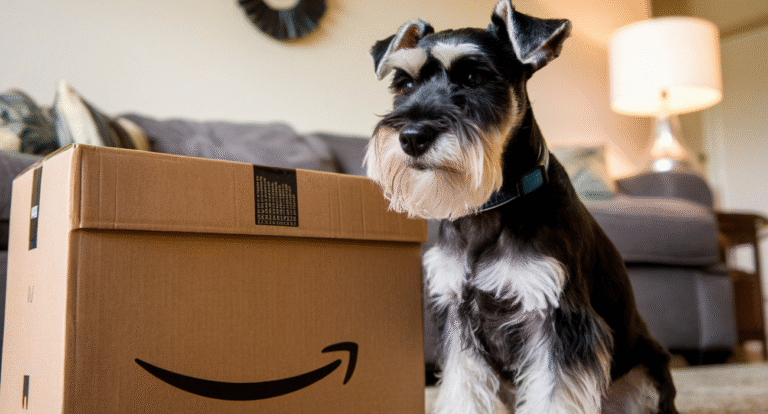
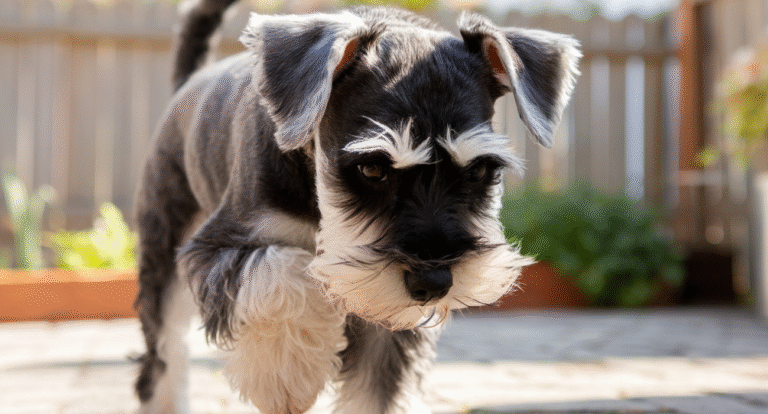
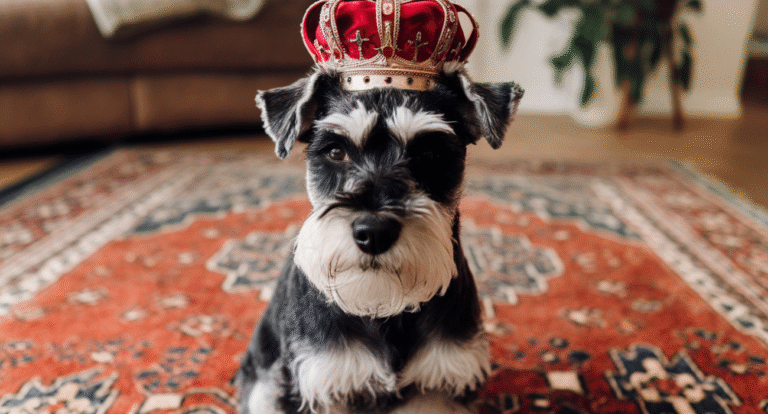
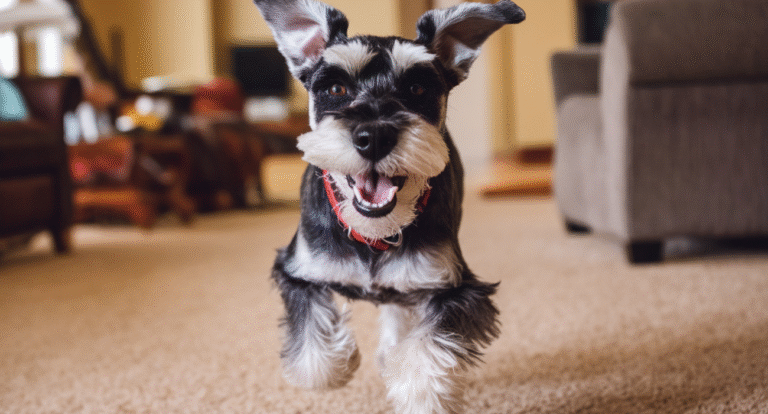
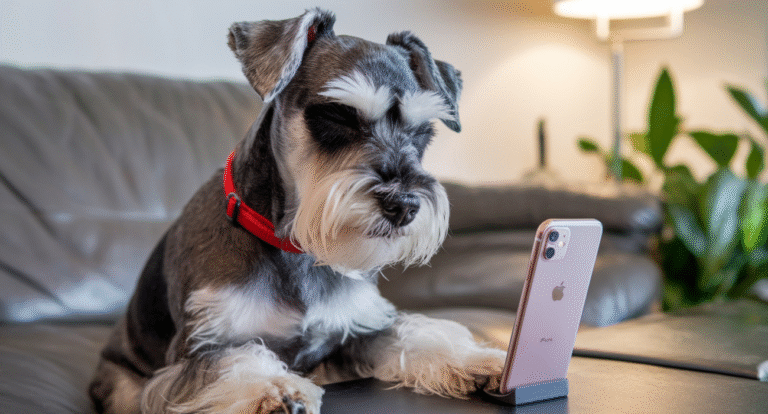
Make training a positive experience with playful methods your Schnauzer will love. Build new skills while keeping tails wagging and stress low.
That beard. Those eyebrows. That attitude. Your Schnauzer has personality for days and the stubbornness to match. Traditional training often crashes against their independent spirit like waves against a very furry, very opinionated rock.
But what if training didn’t have to be a battle of wills? What if your Schnauzer actually begged to practice commands? The magic happens when you speak their language: play. When training becomes the highlight of their day instead of a chore, everything changes.
1. Turn Commands Into Treasure Hunts
Schnauzers possess noses that could rival professional detectives. Why not use this superpower to your advantage? Instead of drilling “sit” and “stay” in the boring confines of your living room, hide treats around your yard or home and incorporate commands into the search.
Start simple: ask for a “sit” before revealing the first hiding spot. Then “stay” while you jog to the next location. As your Schnauzer gets better, increase the difficulty. Hide treats in puzzle toys, under flower pots, or inside cardboard boxes they need to investigate. The seeking behavior keeps them mentally stimulated while the commands become natural parts of their favorite game.
The beauty here is double reinforcement. They’re rewarded both for following your command and for finding the treasure. Your Schnauzer won’t even realize they’ve practiced “wait” fifteen times because they’re too busy channeling their inner bloodhound.
Training becomes effortless when your dog associates commands with the thrill of discovery rather than the pressure of performance.
2. Use Their Toys as Training Tools
Every Schnauzer has that toy. You know the one – the ratty tennis ball or squeaky squirrel they’d choose over their own dinner. This beloved object is your secret weapon. Never give this toy freely; make it the ultimate training reward.
Want a perfect recall? Call your Schnauzer and produce the sacred toy when they come sprinting. Need better leash manners? A few seconds of tug is worth more than a pocket full of treats when you’re working with a toy motivated pup. The key is intermittent reinforcement – sometimes they get the toy, sometimes just praise, keeping them guessing and engaged.
Create a game where different commands earn different amounts of play time. A simple “sit” gets five seconds of tug. A “down” and “stay” combo? Thirty glorious seconds of keep away. Your Schnauzer will start calculating which behaviors earn the most playtime, effectively training themselves.
3. Implement the “Training Tiny Moments” Philosophy
Forget dedicated training sessions. Schnauzers get bored faster than you can say “miniature schnauzer standard.” Instead, sprinkle micro training moments throughout your day. Each one lasts maybe fifteen seconds, but the cumulative effect is powerful.
Before meals: quick sit and eye contact. Before going outside: wait at the door. Before getting on the couch: a rapid “up” command on cue. Before playtime: a speedy down. These tiny moments add up to dozens of successful repetitions daily, without the monotony of traditional sessions.
This approach works brilliantly for Schnauzers because it matches their attention span and keeps them sharp. They never know when a training moment is coming, so they stay alert and responsive. Plus, it removes the stress of formal sessions where they might feel pressured or scrutinized.
4. Create an Obstacle Course Adventure
Transform your backyard or living room into an agility course using household items. Broomsticks become jump bars, cardboard boxes turn into tunnels, and couch cushions make excellent weaving poles. This isn’t about competing in formal agility (unless that’s your thing); it’s about making training feel like a theme park adventure.
Guide your Schnauzer through the course using treats and encouragement. Incorporate sits before jumps, downs before tunnels, and waits at various stations. The physical activity burns energy while the mental challenge of navigating the course keeps their clever brain engaged.
| Household Item | Training Exercise | Skills Developed |
|---|---|---|
| Broomstick (on blocks) | Jump over on command | Listening, body awareness, confidence |
| Cardboard box | Crawl through tunnel | Trust, “go” command, problem solving |
| Couch cushions | Weave between obstacles | Following directions, coordination |
| Hula hoop | Jump through or step inside | Precision, spatial awareness |
| Small stool | Four paws on target | Balance, “place” command, patience |
Rotate the course layout regularly. Schnauzers thrive on novelty, and a fresh configuration feels like a brand new game. Before you know it, your pup is crushing multiple commands in sequence without realizing they’re being trained.
5. Practice “Choice Training” for Impulse Control
Here’s where things get interesting. Place a treat on the floor and cover it with your hand. Your Schnauzer will try everything: pawing, nudging, barking, possibly staging a small protest. The moment they sit back or make eye contact? Reward them with a different treat from your pocket.
This game teaches your Schnauzer that polite behavior gets rewarded, while pushy behavior gets nothing. It’s impulse control wrapped in a puzzle they can’t resist solving. Level up by increasing duration, using higher value treats as distractions, or practicing in more stimulating environments.
The genius of choice training is that your Schnauzer feels empowered. They’re not being forced into compliance; they’re choosing good behavior because it works better. This subtle shift creates a willing partner rather than a resentful rule follower.
When dogs discover that calm behavior unlocks what they want, they become active participants in their own training rather than passive recipients of commands.
6. Host “Schnauzer Shows” for an Audience
Schnauzers are natural performers. They love attention, approval, and showing off their skills. Invite friends over (or just gather your family) and host mini performance sessions where your Schnauzer demonstrates their tricks.
The audience provides novel stimulation and motivation. Your pup will likely perform better with people watching, eager to impress the crowd. Start with commands they know well, gradually introducing newer behaviors. The social pressure actually helps cement training because Schnauzers rise to the occasion when there’s an audience to wow.
Make it celebratory with applause and praise. Your Schnauzer will connect training with positive attention and social success. Soon they’ll be offering behaviors unprompted, hoping to earn that delicious validation from onlookers.
7. Incorporate Training Into Interactive Play
Never separate training from play; blend them seamlessly. During a game of fetch, ask for a sit before throwing the ball. During tug, practice “drop it” by offering a treat exchange. During chase games, work on recall by running away and calling their name.
The key is maintaining the playful energy throughout. If your voice gets too serious or your body language stiffens, your Schnauzer will sense the vibe shift from fun to work. Keep it light, keep it bouncy, and keep the rewards coming fast.
This method particularly suits Schnauzers because they’re highly attuned to emotional energy. When you’re genuinely having fun, they relax and engage more fully. Training becomes something they seek out rather than tolerate.
8. Use “Reverse Psychology” Games
Schnauzers are clever enough to appreciate a good mind game. Try this: walk toward something interesting (the treat jar, the door, their leash), and the moment your Schnauzer rushes ahead, stop completely. Stand still like a statue. The instant they look back at you or return to your side, move forward again.
This teaches loose leash walking and attention without a single verbal command. Your movement becomes the reward. Your Schnauzer quickly figures out that staying near you makes good things happen, while pulling creates boring stillness. It’s problem solving disguised as a game, and these smart pups eat it up.
The beauty is the lack of pressure. You’re not correcting or commanding; you’re simply showing your Schnauzer how the game works. They get to figure it out themselves, which appeals to their intelligent, independent nature.
9. Schedule “Sniff and Seek” Training Sessions
Combine your Schnauzer’s need for mental stimulation with obedience work through scent based games. Hide yourself in the house and call your dog, rewarding them lavishly when they find you. This makes recall the most exciting game imaginable.
For variety, hide scented objects (a sock you’ve worn, a toy rubbed with bacon) and teach your Schnauzer to search on command. Before releasing them to search, practice a solid sit and stay. The searching itself becomes the reward for impulse control.
Mental exhaustion through scent work creates a calm, focused dog who’s more receptive to learning new behaviors.
These activities tap into natural instincts while building obedience. A mentally tired Schnauzer is a well behaved Schnauzer, and scent games provide that deep cognitive workout they crave.
10. Celebrate “Mistakes” as Learning Opportunities
Here’s the stress free secret: when your Schnauzer gets something wrong, treat it like interesting data rather than failure. They sat when you asked for down? Cool! They’re engaged and trying. Simply reset without frustration, maybe make the next request clearer, and try again.
This mindset shift changes everything. Your Schnauzer picks up on your emotional state instantly. If you’re stressed about mistakes, they become stressed too. But if you stay playful and curious (“Oh, that’s not quite it! Let’s try again!”), they stay confident and willing to experiment.
Keep sessions short enough that you end on success, even if that means simplifying the final request. Your Schnauzer should finish every training game feeling like a champion, not a failure. That confidence carries into the next session, creating an upward spiral of enthusiasm and progress.
Training your Schnauzer doesn’t require stress, force, or endless repetition. It requires understanding that these bearded beauties learn best when they’re having the time of their lives. Make it playful, keep it varied, and watch your stubborn Schnauzer transform into your most eager student.