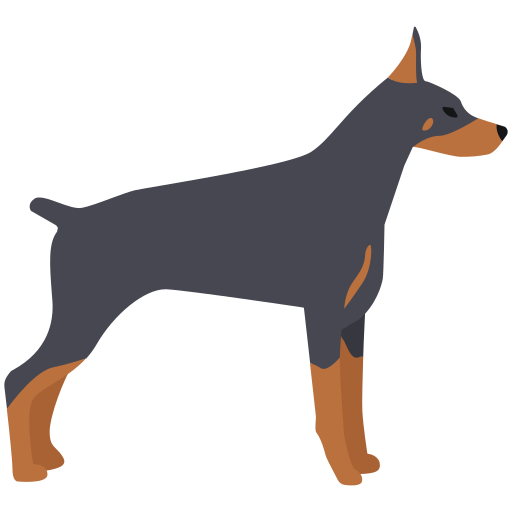
 Doberman
 Ask a room full of dog people to describe a Doberman and you will hear words like serious, guard dog, not a beginner breed. Ask someone who actually shares a couch with one and the report comes back completely different: a 75 pound lap dog with the emotional needs of a toddler and the comedic timing of a stand-up act.
That is the strange truth about this breed. The dog originally developed to protect a tax collector on his rounds turned out to be one of the softest, silliest, most emotionally attached companions in the entire working group.
Once you know that, everything else about them starts to make sense.
1. The Shadow That Comes Free With Every Dog
Nobody warns you about the bathroom thing.
A Doberman does not simply live in your house. A Doberman assigns himself to you, personally, and then follows you from room to room like an unpaid security detail with abandonment issues.
Owners call them velcro dogs, and the nickname undersells it. Velcro can be pulled apart.
What that looks like day to day
You get up for water at 2 a.m. and hear four paws hit the floor behind you. You move from the kitchen to the office and a long black head appears in the doorway thirty seconds later, checking that the situation is still under control.
Some breeds love their families. This one audits them.
2. A Brain That Refuses to Clock Out
Dobermans consistently land near the top of canine intelligence rankings, and living with one makes that ranking feel almost conservative.
They learn commands fast. They also learn things you never intended to teach, like which cabinet holds the treats, what sound the leash makes when it comes off the hook, and exactly how long you stay in the shower.
A bored Doberman does not sit quietly and wait for you to notice. A bored Doberman starts a project, and you will not like the project.
Give that brain a job and it becomes the most cooperative dog you have ever owned. Leave it idle and it will invent puzzles for itself, usually involving your belongings.
3. The Lean
There is a specific greeting this breed performs that owners recognize instantly.
The dog walks up beside you, turns sideways, and slowly transfers roughly half of his body weight onto your leg. No eye contact. No fanfare. Just quiet, heavy contact.
It is affection expressed through physics.
Why they do it
Part of it is scent and comfort, the same instinct that makes dogs sleep in piles. Part of it is that a Doberman genuinely wants to be touching his person as much as socially possible.
Sit on the floor and you will not be alone for long.
4. They Talk, and They Have Opinions
Nobody expects this one.
Dobermans are famously vocal in a way that has nothing to do with barking. They grumble, groan, sigh theatrically, and produce a low warbling noise that owners have nicknamed the roo roo.
You will hear it when dinner is late. You will hear it when someone takes their preferred spot on the couch. You will absolutely hear it when you stop petting them before they have authorized you to stop.
The conversations are one sided, technically. They do not feel one sided.
5. Comedians Wearing a Serious Costume
Here is the disconnect that surprises new owners the most. The breed looks like it was designed by an architect, all sharp angles and clean lines, and then it behaves like a cartoon.
Dobermans do zoomies well into adulthood. They bring you socks with tremendous pride. They play bow at squirrels, at other dogs, at nothing in particular.
The most intimidating silhouette in the neighborhood belongs to a dog who will absolutely fall off the couch chasing his own tail.
That contrast never really wears off. Ten years in, owners are still laughing at a dog who looks like he should be guarding a warehouse.
6. Blanket Burrowers, Every Single One
Dobermans have a short, single coat with almost no undercoat and very little body fat to spare. Translation: they get cold constantly and they are not subtle about it.
Leave a throw blanket on the couch and it will be occupied. Leave your bed unmade and you will find a long dog fully submerged under the covers, nose to tail, arranged like a person.
Practical stuff worth knowing
Cold weather calls for a coat, not a debate. Below freezing, potty breaks get short and purposeful.
Most owners give up fighting the bed situation within the first month. It is a losing battle and the dog knows it.
7. Emotional Sensitivity That Runs Deep
This trait catches people off guard more than any other.
For a breed with such a tough reputation, Dobermans are remarkably thin skinned when it comes to their handlers. Harsh corrections do not build respect with this dog; they build a shut down, worried animal who stops offering behavior at all.
They read tone before words. They read posture before tone.
Come home stressed after a rough day and your Doberman will notice before you have set your keys down, then quietly plant himself against your leg until the mood improves.
The training takeaway
Firm, consistent, and fair works beautifully. Loud and punitive backfires spectacularly.
Positive reinforcement with clear boundaries produces a dog who wants to get it right, because getting it right is genuinely how this breed measures its own worth.
8. Protective Instincts With an Actual Off Switch
A well bred, well socialized Doberman is not a hair trigger. That is the part the movies got wrong.
What you get instead is a dog with excellent judgment: alert to something genuinely unusual, completely relaxed when your friends come over, capable of telling the difference between a delivery driver and a problem.
The deterrent effect is mostly passive anyway. Very few people approach a house with a Doberman standing in the front window, and the dog rarely has to do anything at all.
That combination of watchfulness and stability is the whole reason the breed earned its reputation in the first place.
9. Athletes Who Move Like They Know You Are Watching
Dobermans are built for endurance and speed, and it shows in everything they do.
Watch one trot across a field. There is a floaty, ground covering rhythm to it that looks almost effortless, which is exactly why the breed cleans up in agility, dock diving, obedience, and protection sports.
Matching the energy
Two solid walks a day is a starting point, not a finish line. Add sniffing, training games, tug, puzzle feeders, or a real sport if you have the time.
Physical exercise tires the body. Mental work tires the dog. You need both, and owners who figure that out early have a much easier first two years.
10. Bonded for Life, Not for Convenience
Dobermans attach hard and permanently.
They are not the dog who greets every stranger with equal enthusiasm, and they are not the dog who forgets you after a weekend away. Once you are theirs, you are theirs, and the loyalty is almost uncomfortably total.
Dobermans do not love casually. They pick a person, commit completely, and then spend the rest of their lives making sure that person knows it.
That intensity is a responsibility, honestly. A dog who bonds this deeply struggles with being rehomed, left alone for ten hours a day, or relegated to a backyard.
Give one the life it was built for, meaning close contact, real work, clear rules, and a warm place to burrow, and you get something remarkable in return: a bodyguard who thinks he is a lap dog, a genius who acts like a clown, and a friend who will not let you walk to the mailbox alone.